The Importance of Disinfection Services for Commercial Properties in Houston
Houston's heat, humidity, and year-round activity create conditions where bacteria, viruses, and mold thrive inside commercial buildings. Routine cleaning keeps surfaces looking clean, but it does not eliminate the pathogens that put employees, customers, and visitors at risk.
Disinfection is a separate and necessary step, and understanding how it works can help you make smarter decisions for your property.
Cleaning vs. Disinfecting: What Is the Difference?
These two terms are often used interchangeably, but they describe very different processes. Cleaning removes visible dirt and debris from surfaces. Disinfecting uses EPA-registered chemical agents to kill bacteria, viruses, and fungi that cleaning alone leaves behind.
In a commercial setting, you need both. Cleaning without disinfecting is like washing your hands without soap. It looks right but does not do the full job.
Why Houston Businesses Face Higher Disinfection Risks
Houston's subtropical climate is one of the most demanding environments for indoor hygiene in the country. High humidity encourages mold and bacterial growth on surfaces that stay damp. Buildings that run heavy air conditioning create condensation issues that compound the problem.
Add in the density of foot traffic in office parks, medical facilities, retail centers, and restaurants across the metro area, and the risk of cross-contamination becomes significant. Houston also sits in a region with a long allergy and respiratory illness season, making indoor air quality and surface hygiene even more critical.
Warning Signs Your Property Needs Professional Disinfection
Do not wait for a health incident to take action. These signs indicate your current cleaning program is not enough.
- Employees frequently call in sick with similar symptoms
- Persistent musty or chemical odors in restrooms or common areas
- Visible mold or mildew on walls, grout, or HVAC vents
- High-touch surfaces that feel sticky or grimy shortly after cleaning
- Customer or tenant complaints about cleanliness or air quality
- Recent illness outbreaks or confirmed infections in the building
Any one of these should prompt a professional disinfection service, not just a deeper mop job.
High-Touch Zones That Require the Most Attention
Not every surface carries the same risk. Pathogens concentrate in areas where hands make repeated contact throughout the day. Prioritizing these zones is the most effective approach to disinfection.
- Door handles, push plates, and entry keypads
- Elevator buttons and stair railings
- Restroom fixtures, faucets, and dispensers
- Break room counters, appliance handles, and coffee stations
- Reception desks and shared workstations
- Light switches and shared equipment controls
These surfaces should be disinfected daily in most commercial environments, not just during periodic deep cleans.
Professional Disinfection Methods That Actually Work
Consumer-grade sprays and wipes are not sufficient for commercial properties. Professional disinfection uses EPA-registered products and application methods that are proven to work at scale.
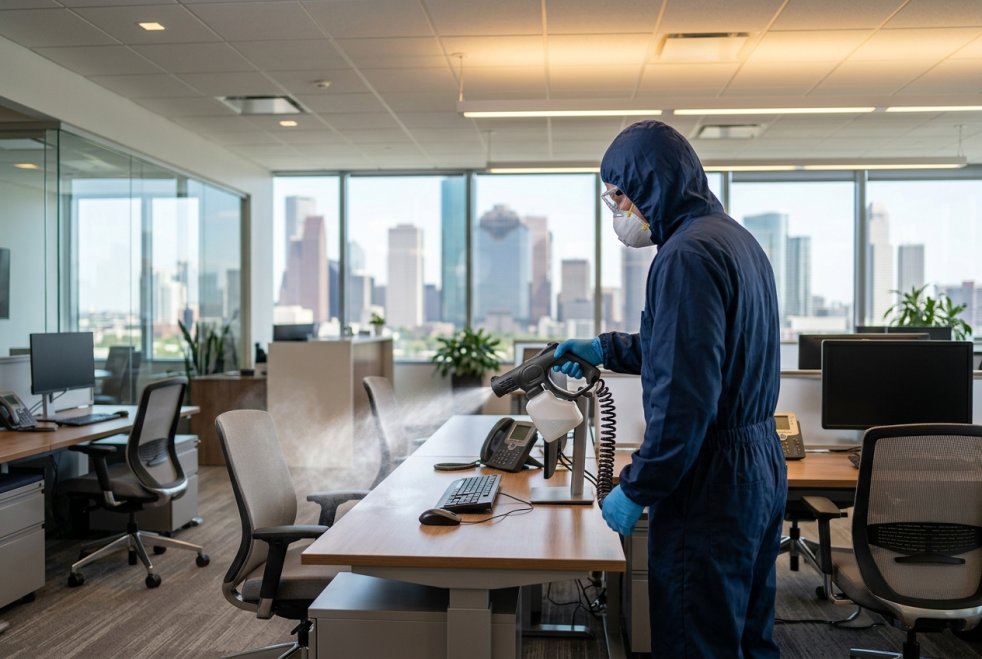
- Electrostatic spraying: electrically charged disinfectant wraps around surfaces for full coverage, including hard-to-reach areas
- Fogging: ideal for large open spaces, distributes disinfectant as a fine mist that settles on all exposed surfaces
- Hospital-grade disinfectant application: used with proper dwell times to ensure pathogens are fully eliminated
- UV-C light treatment: used in specific environments to kill surface and airborne microorganisms without chemicals
The method matters as much as the product. Applying disinfectant and wiping it off immediately defeats the purpose. Proper dwell time, the amount of time the product must stay wet on a surface, is critical to effectiveness.
How Often Should Commercial Properties Be Disinfected?
Frequency depends on the type of facility, foot traffic volume, and the nature of the work being done inside. Here are practical guidelines.
- General offices (low to moderate traffic): full disinfection once or twice per week, high-touch zones daily
- Medical and dental offices: daily full disinfection, with high-touch zones treated between appointments
- Retail stores and restaurants: daily disinfection of customer-facing surfaces, weekly full treatment
- Schools and childcare facilities: daily disinfection of all contact surfaces
- Warehouses and industrial facilities: weekly disinfection with increased frequency during illness outbreaks
In Houston's climate, facilities with high humidity or HVAC condensation issues should lean toward more frequent service to prevent mold-related contamination.
Risks of Skipping Regular Disinfection
Neglecting disinfection is not just a health issue. It creates real business risk.
- Increased employee absenteeism and reduced productivity
- Liability exposure if clients or staff become ill on your property
- Regulatory violations in industries with health and safety requirements
- Damage to your reputation if a contamination event becomes public
- Mold remediation costs that far exceed the price of prevention
A consistent disinfection program is far less expensive than dealing with any one of these outcomes.
What to Do Next
CRC Building Services LLC provides professional disinfection services for commercial properties throughout Houston and the surrounding area. Our team uses EPA-registered products, proven application methods, and schedules built around how your facility actually operates.
Whether you need a one-time treatment or an ongoing program, we can put together a plan that fits your building, your industry, and your budget.
Call (346) 600-9542 today to schedule a facility assessment and get a disinfection plan that protects your people, your property, and your business.


