Commercial Cleaning Requirements for Medical and Healthcare Facilities
Medical and healthcare facilities carry a level of responsibility that goes far beyond a standard office clean. From exam rooms to surgical suites, every surface is a potential point of contact for patients, staff, and visitors. In Greater Houston, where heat and humidity create ideal conditions for microbial growth, the stakes are even higher.
If you manage a clinic, medical office, dialysis center, or any healthcare-related space, here is what you need to know about commercial cleaning compliance and why it matters.
Why Healthcare Cleaning Is a Category of Its Own
Standard janitorial service is not enough in a medical environment. Healthcare cleaning requires trained technicians, hospital-grade disinfectants, and strict protocols that align with regulatory guidelines.
The consequences of cutting corners include patient infections, regulatory violations, and potential facility shutdowns. This is not an area where general-purpose cleaning crews can improvise.
Regulatory Standards That Govern Healthcare Cleaning
Healthcare facilities in Texas must follow guidelines from multiple oversight bodies. Understanding these standards helps facility managers hold their cleaning contractors accountable.
- CDC guidelines for environmental infection control in healthcare settings
- OSHA Bloodborne Pathogen Standard (29 CFR 1910.1030)
- EPA-registered disinfectant requirements for healthcare use
- Joint Commission standards for environmental services
- Texas Department of State Health Services facility licensing rules
These are not suggestions. They are enforceable standards that cleaning contractors must understand and follow on every visit.
Houston Climate Factors That Increase Risk
Greater Houston's heat and humidity create conditions where bacteria and mold thrive faster than in drier climates. High-touch surfaces in waiting rooms or restrooms can harbor pathogens for longer periods when humidity is elevated.
Facilities here also deal with increased foot traffic from patients seeking care during allergy and respiratory illness seasons, which are prolonged in Southeast Texas. That means more contamination cycles and a greater need for consistent, thorough disinfection.
High-Risk Areas That Require Specialized Protocols
Not every area of a healthcare facility carries the same level of risk. Cleaning crews must understand zone-based cleaning, where higher-risk areas receive more intensive treatment.
- Patient exam rooms and treatment areas
- Restrooms and handwashing stations
- Waiting rooms and reception surfaces
- Medical waste staging areas
- Break rooms and staff areas adjacent to clinical spaces
- HVAC vents and air return grilles, which circulate contaminants
Each zone requires specific dwell times for disinfectants, defined cleaning sequences, and documentation of completed tasks.
Specialized Cleaning Protocols Healthcare Facilities Should Expect
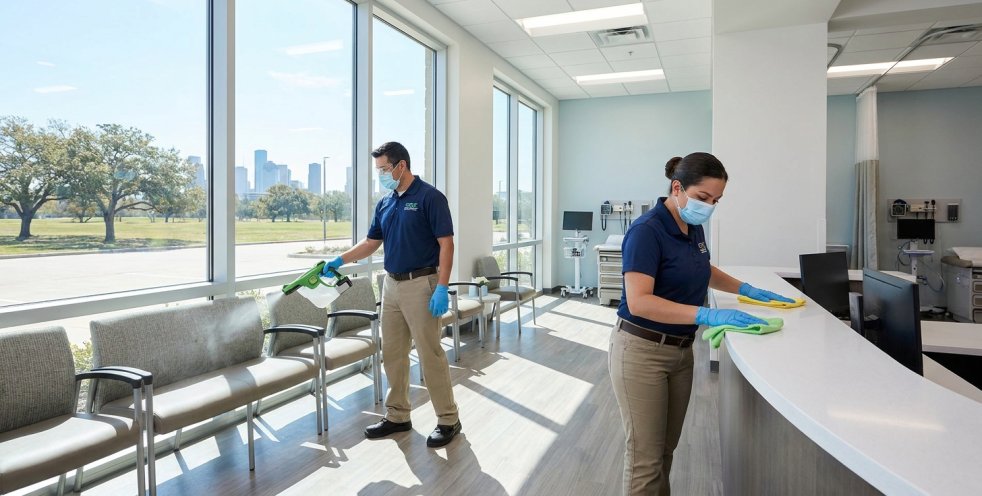
A qualified commercial cleaning contractor will bring more than mops and spray bottles. The right team follows structured protocols designed to reduce cross-contamination at every step.
- Color-coded microfiber systems to prevent cross-zone contamination
- Top-to-bottom, clean-to-dirty cleaning sequences
- Hospital-grade, EPA-registered disinfectants with verified kill claims
- Proper dwell times for disinfectants to be effective (not wiped off too soon)
- Personal protective equipment (PPE) worn by all cleaning staff
- Documented cleaning logs for compliance and audit purposes
- Bloodborne pathogen training for all personnel entering clinical areas
If your current cleaning provider cannot describe these protocols clearly, that is a warning sign worth taking seriously.
Warning Signs Your Facility May Have a Cleaning Compliance Gap
Compliance problems are not always obvious until an inspection or incident occurs. Watch for these red flags.
- Cleaning staff without documented bloodborne pathogen training
- No written cleaning plan or zone-specific schedule on file
- Disinfectants not listed on the EPA's List N or equivalent
- No cleaning logs available for review during inspections
- Persistent odors or visible soil in clinical areas after cleaning
- Staff complaints about restroom or common area conditions
Any one of these issues can put your facility at risk during a regulatory audit or Joint Commission survey.
What to Look for When Hiring a Healthcare Cleaning Contractor
Choosing the right commercial cleaning partner for a medical facility is a serious decision. Here is what separates a qualified contractor from a general cleaning company.
- Demonstrated experience in medical and healthcare environments
- Staff trained in OSHA bloodborne pathogen standards
- Use of EPA-registered, healthcare-grade disinfectants
- Ability to provide written cleaning protocols and documentation
- Flexible scheduling that works around patient hours
- Familiarity with Houston-area regulatory requirements
Ask for references from similar facilities and request a walkthrough before signing any contract. A confident, experienced contractor will welcome the conversation.
What to Do Next
If you manage a healthcare or medical office space in Greater Houston, start by reviewing your current cleaning contract against the standards above. Ask your provider for their written protocols, training records, and product safety data sheets.
If the answers are unclear or incomplete, it is time to bring in a contractor who understands the requirements and takes compliance seriously.
CRC Building Services LLC provides commercial cleaning services for medical and healthcare facilities throughout Greater Houston. Our team is trained in healthcare sanitation protocols, uses the right products for clinical environments, and delivers the documentation your facility needs to stay compliant.
Call (346) 600-9542 today to schedule a facility walkthrough and get a customized cleaning plan built around your compliance requirements.


